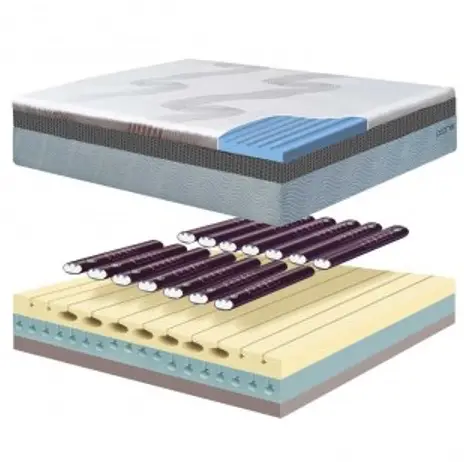
Part 1 of a 2-part Waterbedtime Story™ sponsored by InnoMax Corp.
Waterbeds began their unlikely journey in the late 1960s, emerging from San Francisco’s counterculture scene, sometimes playfully referred to as the “passion pit.” Rooted in a time defined by “peace, not war,” experimentation, and the free-spirited energy of the flowerchild movement, waterbeds quickly captured the imagination of a generation eager for something new.
Pop culture amplified the mystique in spy films
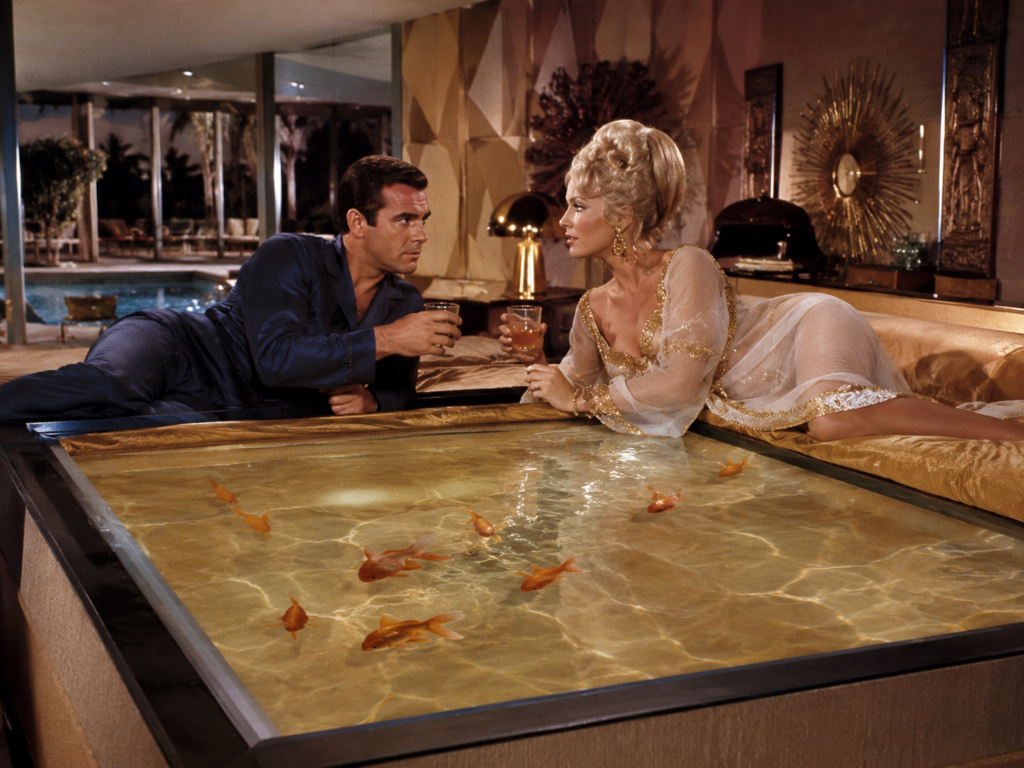
Pop culture amplified the mystique. In the 1960s Matt Helm spy films, a James Bond-style character lounged on a clear waterbed filled with goldfish—an image that symbolized the playful luxury and novelty of the experience. Television and movies leaned into the drama and humor, exaggerating the rolling motion of waterbeds into tidal-wave chaos, often sending one sleeper comically “overboard.” Even mystery plots couldn’t resist the trope, frequently featuring waterbeds as exaggerated centers of intrigue.
Early designs incorporated sound to transmit vibration
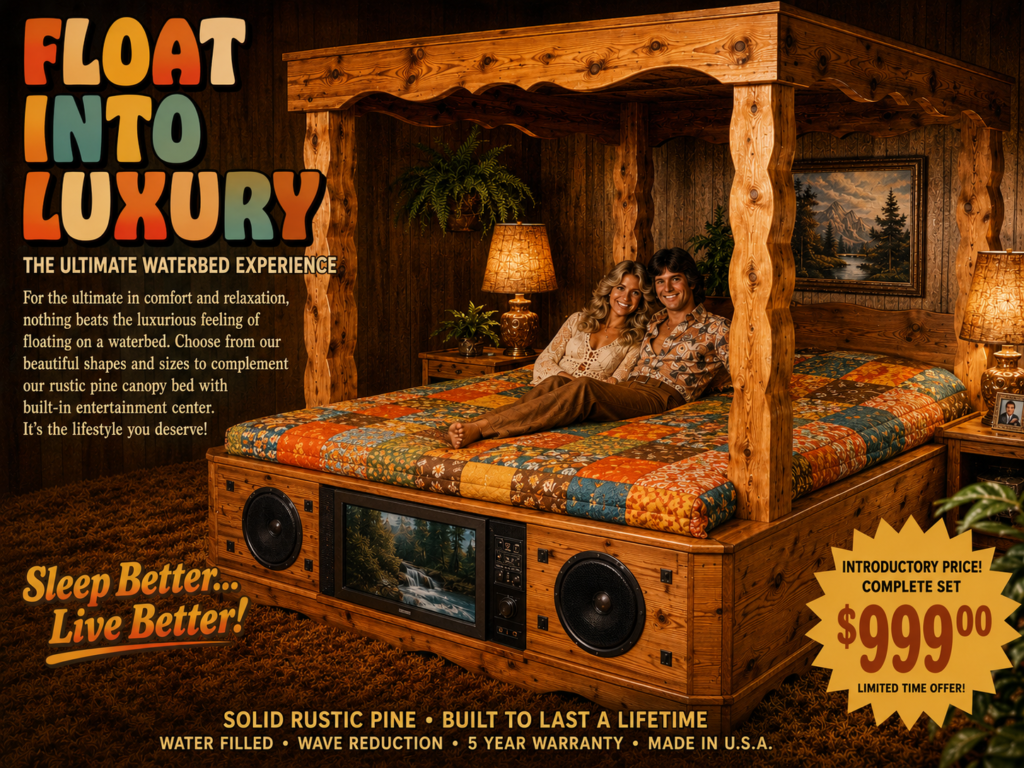
Early pioneers of the waterbed industry saw limitless potential. With vinyl fabrication still evolving, designers pushed boundaries with bold creativity. Beds came in imaginative shapes and sizes, often paired with features that seemed ahead of their time. Some incorporated built-in sound systems beneath the mattress—taking advantage of water’s ability to transmit vibration—while others experimented with pulsing massage systems powerful enough to mimic the sensation of ocean waves.
By the ‘70s waterbeds appeared in an array of shapes
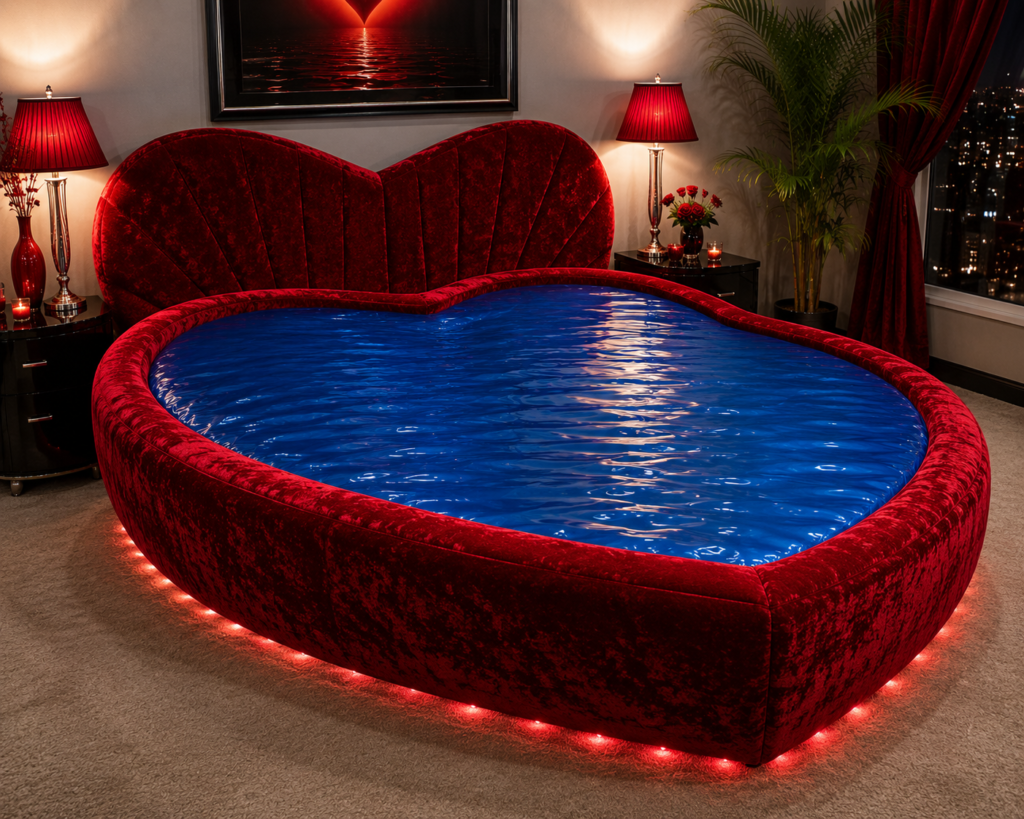
By the early 1970s, waterbeds had expanded far beyond novelty. They appeared in an array of shapes—round, rectangular, octagonal, and even decagonal. Heart-shaped models became especially popular in romantic getaways and themed motel rooms. Mirrored canopy frames added a theatrical flair, and some designs even featured early ceiling-mounted televisions that folded down at the foot of the bed—an innovation well ahead of its time.
The appeal wasn’t just aesthetic or cultural—it was experiential. Many believed a waterbed could transform relaxation and even enhance their overall lifestyle. The sensation of floating, combined with temperature-controlled comfort—cool in the summer, warm in the winter—offered a sleep experience unlike anything else.
Millions & Billions
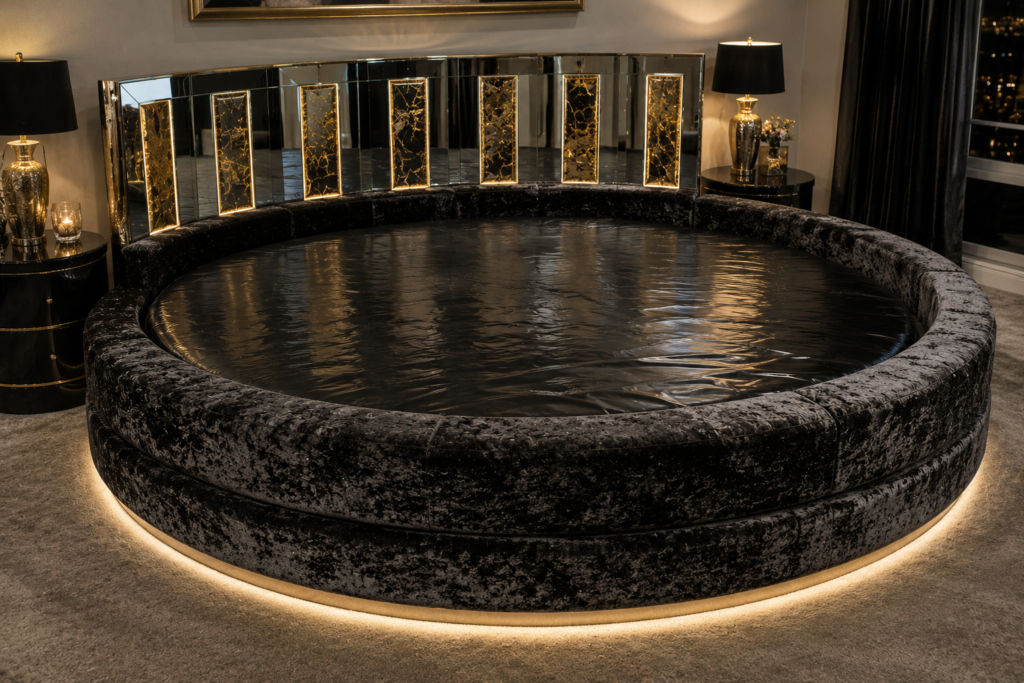
By the late 1970s and early 1980s, the industry had surged into the mainstream, with millions of users and billions in sales. Waterbeds became a defining symbol of innovation in home comfort.
Looking back—and even forward—the core appeal remains clear. Waterbeds provide a uniquely pressure-free, floating sensation that many still find unmatched. It’s not unlike what astronauts describe when asked about one of the simple pleasures of space: the ability to sleep without the constraints of gravity.
Today’s flotation systems integrate seamlessly
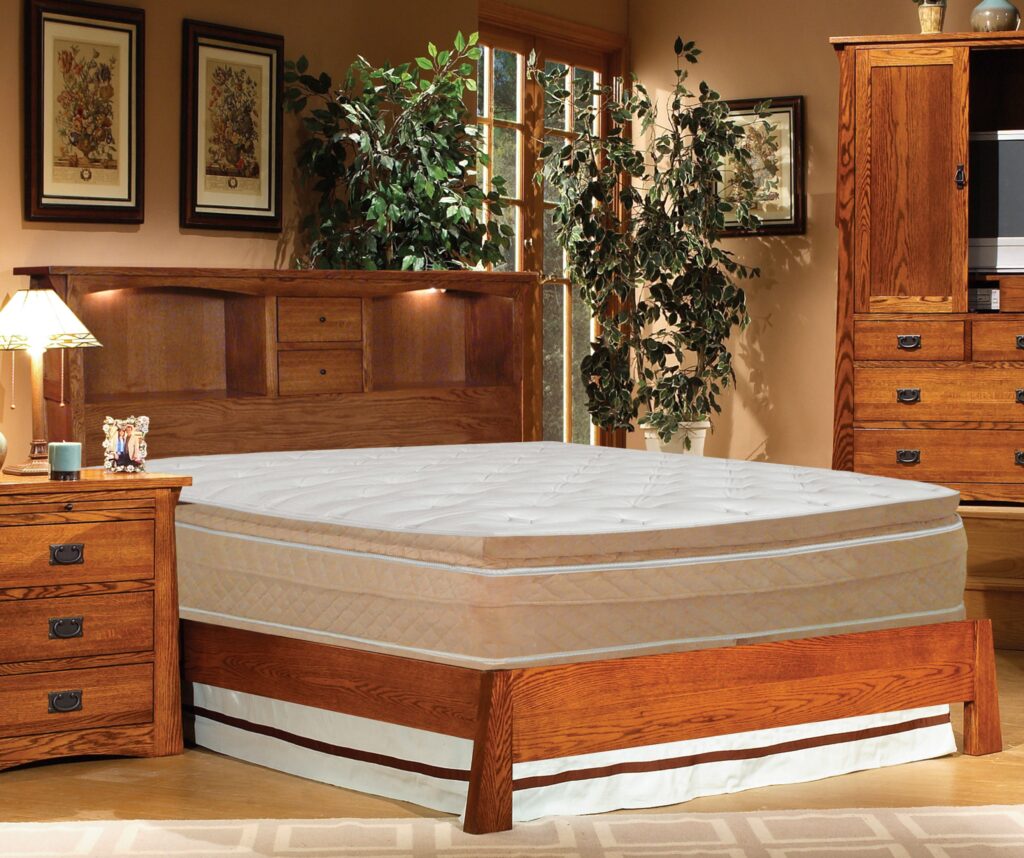
Today’s flotation systems may have traded some of their flamboyant, carnival-like features for refinement and practicality. Modern designs are easier to maintain, incorporate advanced wave-reduction technology, and integrate seamlessly with contemporary bedroom aesthetics which includes the use of standard size bedding on Softside designs. Yet the essence remains unchanged.
Epilog
For those willing to revisit the experience, waterbeds still offer something rare: a sense of fun, relaxation, and escape at the end of each day. Because sometimes, the best way to improve your nights… is to bring a little water back into them.

Contributing author for this edition has been Mark Miller, President of InnoMax Corporation. Check back in with the next episode of Waterbedtime Story™ when we share Part 2 of the “When Waterbeds Ruled” saga. In the meantime please feel free to connect with InnoMax Corporation anytime at Sleep@InnoMax.com.
Footnote Citation: † Matt Helm film The Silencers produced by Irving Allen.