TWO RETRO MOVIES ABSOLUTELY WORTH RE-WATCHING
There is an amusing movie released back in 1990 starring Dana Carvey called Opportunity Knocks. Carvey plays a con man whose scheme is so effective he becomes an unwitting marketing executive for a struggling commercial bathroom fixture manufacturer. After being put on the spot in the board room for an idea to turn things around, he moves the meeting from the boardroom to the bathroom. He then suggests advertising on the inside of bathroom stalls.
The executives are puzzled. “Why?” they ask.
“Because we make them,” replies Carvey’s character.
Ridiculous? Maybe. Simple? Absolutely.
There is a valuable marketing lesson hidden despite the outlandish nature of it. The company didn’t necessarily have to try putting its message everywhere. It only needed to put its message where people already were. Better yet, it could do so at very minimal cost.
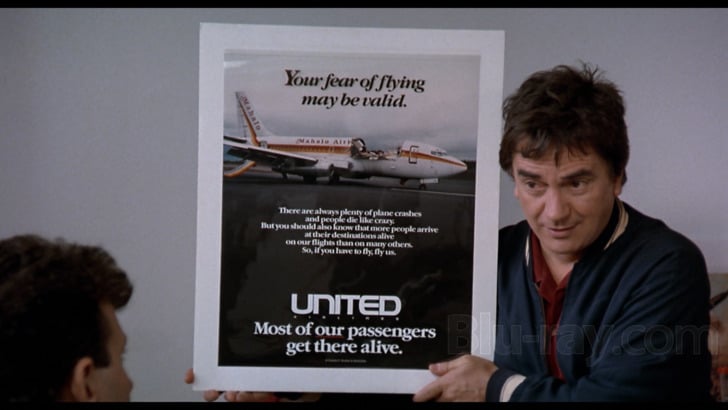
1990 seemed to have been the year for sharing business development ideas through movies. In Crazy People, Dudley Moore plays an advertising executive whose brutally honest campaigns are considered so unconventional that he eventually finds himself committed to a mental institution. The irony is that the public loves the advertisements. They stand out because they are different, lack political correctness, and appeal to a consumer so down-to-earth that they inevitably became a subtle segment of pop-culture. Basically, while everyone else is delivering predictable messages, his campaigns are impossible to ignore. The lesson from Opportunity Knocks is to put your message where people already are. The lesson from Crazy People is to give them a reason to notice it. When those two ideas come together, you don’t lose.
“WHAT IS EVERYONE ELSE DOING?”
On my travels, retailers ask me all the time: “Chris, you talk to a lot of dealers. What is everyone doing to get more people through the door?” It is one of the most common questions in dealer conversations today, and the answers are usually predictable. Bring in a new mattress line. Replace an existing brand that is underperforming. Increase the advertising budget. Launch another promotion. I won’t deny that those strategies certainly have their place, but sometimes the most effective opportunities are much simpler.
ONE OF THE MOST STORIED INVENTIONS EVER: THE T-SHIRT
Consider the T-shirt. Everyone knows what one is, but few people stop to think about how it became one of the most effective marketing tools ever created. The modern T-shirt first appeared in the late nineteenth century as an undergarment. By 1913, the U.S. Navy was issuing white crew neck cotton shirts to sailors to wear beneath their uniforms. American servicemen continued wearing them during both World Wars, and by the 1950s they had become acceptable outerwear thanks in part to Hollywood icons like Marlon Brando and James Dean.
Not long after, businesses discovered an opportunity. One of the earliest known promotional T-shirts was created in 1939 to help market The Wizard of Oz. During the 1940s and 1950s, colleges, tourist destinations, resorts, and summer camps began printing names and logos on shirts as souvenirs. Then came the real breakthrough. Advances in screen printing during the 1960s and 1970s made custom apparel affordable. Businesses suddenly realized they had stumbled onto something remarkable. Consumers would actually pay money for a product that doubled as an advertisement. Rock bands embraced it. Political campaigns embraced it. Beer companies embraced it. Retailers embraced it. For kicks and giggles: If Buc-ee’s sold a T-shirt to 1% of their annual visitors, they’d sell 1 million T-shirts a year. By the 1980s, branded T-shirts had become one of the most common forms of advertising in America. Companies realized they were creating walking billboards. What makes a T-shirt different from traditional advertising is that it does not feel like advertising. A financing sign tells customers how to pay. A manufacturer logo tells customers who made the product. But a branded T-shirt communicates something different. It tells people WHO YOU ARE. That is precisely why people proudly wear shirts promoting their favorite college, sports team, vacation destination, or trendy brand. The shirt becomes part of their identity.
YES, T-SHIRTS WORK.
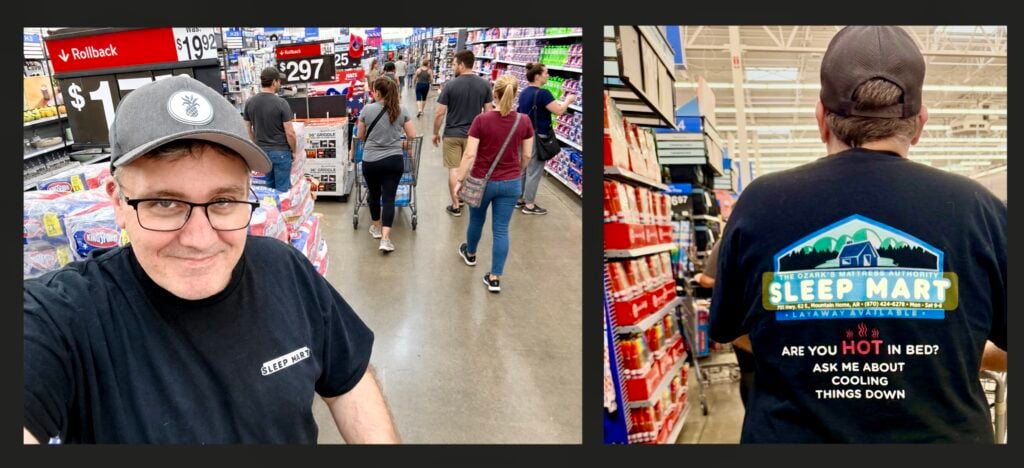
The same principle applies to mattress/furniture retail. If I have errands to run around town, it is out of respect that I wear a t-shirt from Sleep Mart, my hometown specialty sleep and lift chair retailer (and yes, my customer). On the front is the company logo. On the back is a simple question:
“Are You Hot In Bed?” Followed by “Ask Me About Cooling Things Down.” A potential problem (with a clever insinuation), and a proposed solution. If I’m at Walmart, it’s being shared in a high traffic venue that Sleep Mart would never be able to advertise in otherwise..
Here are some things that this t-shirt is not: A Facebook post advertising a sale. It is not a coupon begging the customer to potentially buy an inferior solution under duress of a temporary offer. It is not a vinyl banner advertising a financing option. It is not a 1′ X 2″ lawn sign that we hope someone sees IF they happen to take that street that day.
“THAT’S GREAT! BUT HOW IS IT BETTER THAN WHAT I’M DOING NOW?”
A carefully crafted T-shirt is a conversation starter, and that is precisely why it works. Nobody walking through Walmart expects to encounter mattress-specialty advertising. Yet the shirt puts the message exactly where people already are while giving them a reason to notice it. In other words, it combines the lessons from both Opportunity Knocks and Crazy People. The goal is not to force a sales pitch on strangers. The goal is to create curiosity. And curiosity starts conversations, and conversations build familiarity. And familiarity creates trust. And trust often determines where consumers shop when the time finally comes to replace a mattress.
The $10 Sleep Mart t-shirt enables me to carry their brand into places where traditional advertising has little to no chance of reaching people. Sleep Mart cannot place advertisements inside Walmart. They cannot place signs inside restaurants. Walking up to strangers at the hugely attended 4th of July rodeo, the county fair, or a hometown football game to tell them about a mattress store would probably be considered strange behavior.
But what any retailer, or any ambitious retail sales associate looking to build a book of business for that matter – CAN DO is put a message on a t-shirt and let conversations happen naturally. And they do.
“I drive by there all the time. Do you work there?”
“Are you running any specials?”
“I need to come see you. My mattress is getting bad.”
“Funny t-shirt. Can I take a picture and send it to my wife?” (Yes, that happened).
SOMETHING FROM NOTHING.
Those interactions cost nothing, yet they create awareness and engagement that otherwise never would have happened. That is why the economics are so compelling. A retailer can spend thousands of dollars on a direct mail campaign, or intensely sell off floor models to make way for a new line that they hope is going to change their traffic fortunes. The direct mail gets discarded within seconds or days when the deadline is missed. The new line may not bring in any more shoppers than the one it replaced.
A $200 investment in quality branded shirts could last for years.
Every time someone asks a question, recognizes a logo, or comments on a message, another conversation begins. What makes T-shirt marketing particularly interesting for mattress retailers is that it operates differently than almost every other form of advertising we buy. Most marketing is interruption based. A television commercial interrupts a program or YouTube video. A radio spot interrupts music. A social media advertisement interrupts scrolling. A direct mail piece shares space in the brain along with the bills that arrived with it. Consumers have become remarkably skilled at filtering these messages out. Entire industries have emerged around helping consumers avoid advertising. We hit the skip button on commercials. We install ad blockers. We pay for premium subscriptions to eliminate advertisements from our streaming services entirely. But a T-shirt….a late 1800’s creation…..works differently. It does not demand attention. Instead, it earns attention. The message is introduced naturally through human interaction. And correct me if I’m wrong, the essence of sales is HUMAN INTERACTION. Someone notices a logo while standing in line. A person sitting nearby at an airport gate reads a slogan. A parent at a youth sporting event sees a shirt and starts a conversation. The advertising does not feel like advertising because it arrives through a person rather than a platform. To many consumers willing to exchange their hard-earned money for a problem-solving solution; that distinction matters.

“I’VE GOT A GUY/GIRL!”
Consumers often distrust advertisements, but they trust people. When a retail sales associate wears a branded shirt around town, they are not simply displaying a logo. They are lending credibility to the business behind it. They’re declaring to their community that they take pride in what they do, and how they earn their living. They are indirectly telling potential customers “This is who I am. And I can fix your problem if you give me a shot. I want to be your guy/girl.” The shirt becomes social proof. And it will earn them a sale long before the Harley Davidson or Chicago Cubs t-shirt will. In fact, just like friends and neighbors say “I’ve got a guy!” when you need a plumber or an electrician; you can be “the guy/girl” for sleep and recovery.
This is particularly important in the mattress industry because most consumers only shop for a mattress every 8 to 12 years. Unlike restaurants, grocery stores, or convenience stores, we do not have the benefit of a constant flow of customer visits. By the time someone needs a mattress, they won’t remember the radio commercial they heard six months ago, they may not remember the social media advertisement they scrolled past last week, and they can be oblivious to the direct mail they threw in the trash yesterday. What they do remember are exposures to a brand in particular states of mind. Some of the finest marketing researchers have long understood the value of that. The more often consumers encounter a name, along with HOW they encounter it, the more comfortable they become with it. A T-shirt creates familiarity in places where traditional advertising rarely exists.
WHAT STOPS THE RETAIL SALES ASSOCIATE? NOTHING!
Imagine a retail sales associate wearing a store shirt once per week while running errands around town. Over the course of a year, that shirt may be seen hundreds or even thousands of times. The cumulative exposure generated by a single employee can rival marketing efforts that cost significantly more. If I’m a retail sales associate, and I take my family out to a local restaurant for a decent dinner, I’m leaving my server with this:
“I’m giving you two tips: the one on the bill for 25% for the excellent service, and the other being that if you or someone you love isn’t getting the best rest, my name is Chris, and you’ll find me right here on this t-shirt. Have you seen this logo sign on Main Street?” The effect becomes even more powerful when multiple employees participate. A five person sales team wearing branded apparel throughout the community creates hundreds of impressions every week. A retailer with multiple locations creates thousands. Unlike a billboard that remains fixed in one location, those impressions zig and zag through different neighborhoods, department stores, restaurants, sporting events, parks, beaches, church gatherings, fitness centers, community festivals. The reach extends far beyond the store’s physical footprint. And it honors an employer that could be paying high customer acquisition costs to generate opportunities for a sales team.
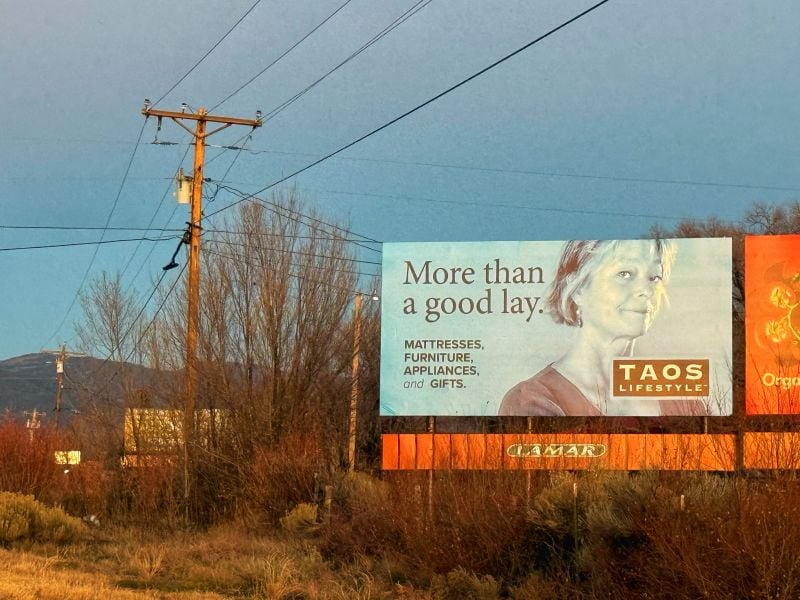
EVEN AS OUR INDUSTRY CHANGES, SOME “OLD” IDEAS LIVE FOREVER
A well designed t-shirt, at perhaps $10 per, does more than advertise. It reinforces culture. It creates pride. It strengthens identity. It reminds employees that they are part of a team. The best shirts are rarely overloaded with sales messages. In fact, many of the most effective designs do not mention a promotion at all. They simply create curiosity.
A clever slogan. A memorable phrase. An interesting question. A human fact. A message that causes someone to ask, “What does that mean?” That question can be where the real value of the customer-salesperson relationship begins.
In addition to spending significant time discussing customer acquisition costs, store owners analyze advertising budgets, digital campaigns, lead generation programs, and promotional events. Yet some of the most productive conversations about our businesses occur outside the showroom entirely. Airport terminals. Grocery stores. Restaurants. The bleachers at the little league baseball game. School functions. Community festivals. They happen everywhere, if they’re enabled to happen. Those interactions are difficult to measure, but they are very real. They create awareness. They create familiarity. They create trust. Most importantly, they keep your brand present in the community between mattress purchases. The average consumer we walk past does not need a mattress today. They may not need one next month. They may not need one next year. But when they finally do, the retailer whose name has consistently appeared in their community often enjoys an advantage over the retailer they have never heard of or one that didn’t connect with them while in a particular state of mind.
WILL LAUNDRY DAY NOW EARN YOU MORE SALES?
In many ways, the T-shirt accomplishes exactly what Dana Carvey’s fictional bathroom fixture company was trying to accomplish. It puts a message where people already are. And like Dudley Moore’s unconventional advertisements in Crazy People, it gives people a reason to notice. The difference is that instead of waiting for customers to encounter your marketing, your marketing travels wherever your employees go. Retailers spend thousands of dollars every year trying to lower customer acquisition costs. Yet for the price of a few quality t-shirts, they can turn their entire sales force into brand ambassadors who create awareness, whether the customer needs a solution today or they don’t Does the t-shirt replace advertising completely? Of course not. But if your goal is to put your message where people already are and give them a reason to remember you when the time comes to buy, you may discover that the most cost effective billboard in town is the one that’s sitting in the hamper.