Sleeping on your side concentrates your entire body weight onto two narrow contact points, which means the shoulder and the hip end up carrying a load that the waist and knees are doing nothing to share.
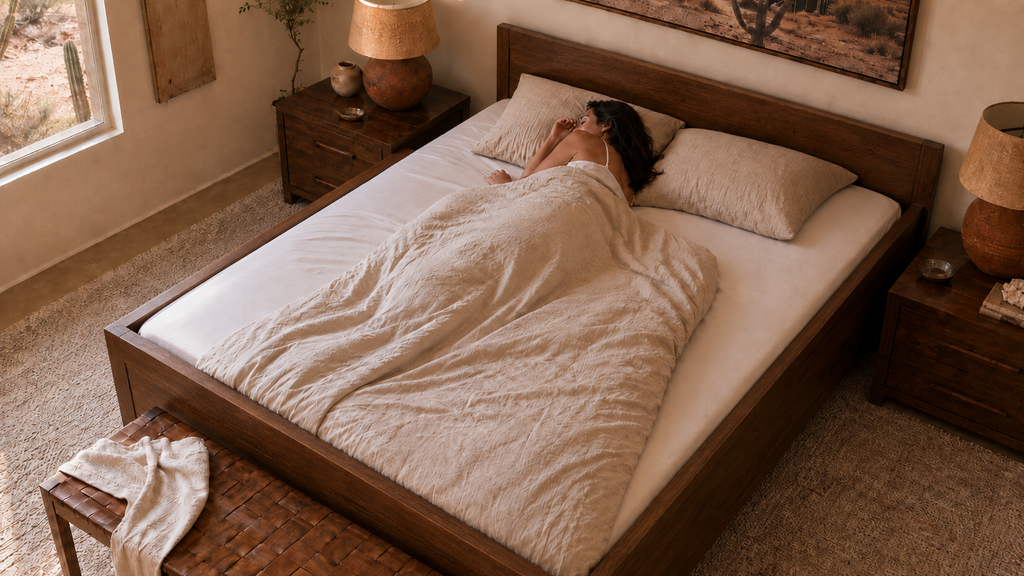
Every conventional mattress has to solve that problem the same way, by pushing back, because foam and springs work through compression and naturally resist the heaviest parts of you the hardest. The result is a surface that fights your shoulder while leaving the curve of your waist unsupported, so the arm goes numb somewhere around three in the morning, the hip aches by the time you wake up, and the lumbar spine spends eight hours bent into a shape it was never designed to hold. Most people assume they need a better pillow, when the actual problem is happening a foot and a half further down the bed.
The Waterbed Approach
Modern waterbeds approach the whole thing from the opposite direction, because water does not compress the way foam does, it displaces.
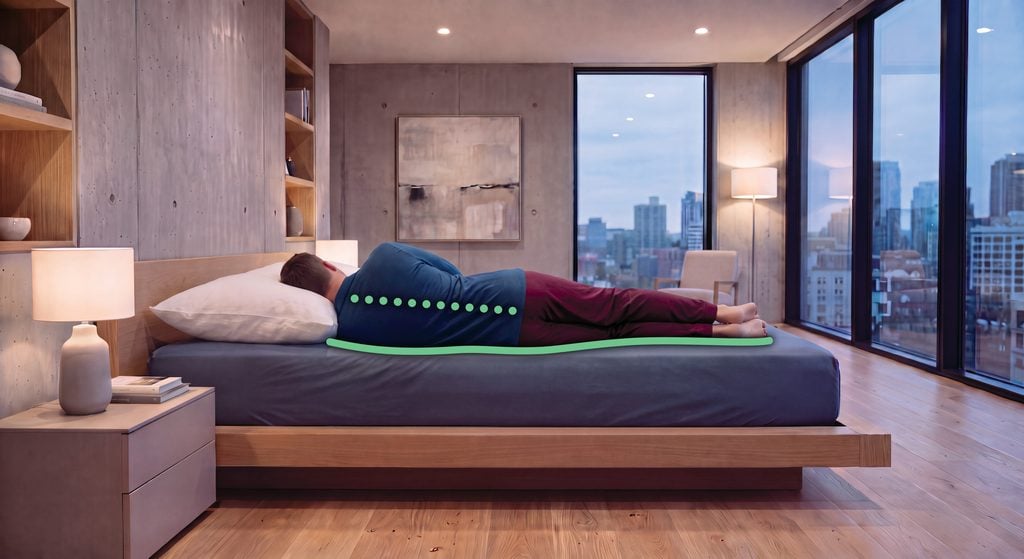
That single difference means pressure spreads evenly across every square inch of contact rather than concentrating beneath the two points bearing the most weight, so the shoulder sinks until it finds equilibrium instead of sinking until the material simply runs out of give, and the gap under the waist gets filled in rather than left to hang. Engineers call this hydrostatic support, and it remains the only sleep surface that redistributes body weight through physics instead of through a carefully tuned foam blend attempting to approximate the same effect. Contemporary bladders build on that foundation with fiber baffles and lumbar tubes that govern precisely how much movement occurs and where it happens, which is what allows the float to feel stable while keeping the spine neutral from the base of the neck all the way to the tailbone.
Why Revisit?
What makes this worth revisiting now is that the broader ergonomic conversation has finally arrived at the place waterbeds started. For the better part of thirty years, mattress innovation has meant adding layers, whether that took the form of more zones, more proprietary foams, or more cooling gel, and nearly all of it has been in service of imitating a surface that distributes weight evenly on its own. Waterbeds begin at that point rather than working toward it, and when you factor in the gentle warmth that keeps muscles relaxed and circulation moving through the same pressure points that would otherwise go cold and stiff overnight, you end up with a sleep surface designed around the mechanics of the human body rather than around whatever a factory is able to laminate together. The technology never stopped working the way it was supposed to. The industry just stopped talking about it.